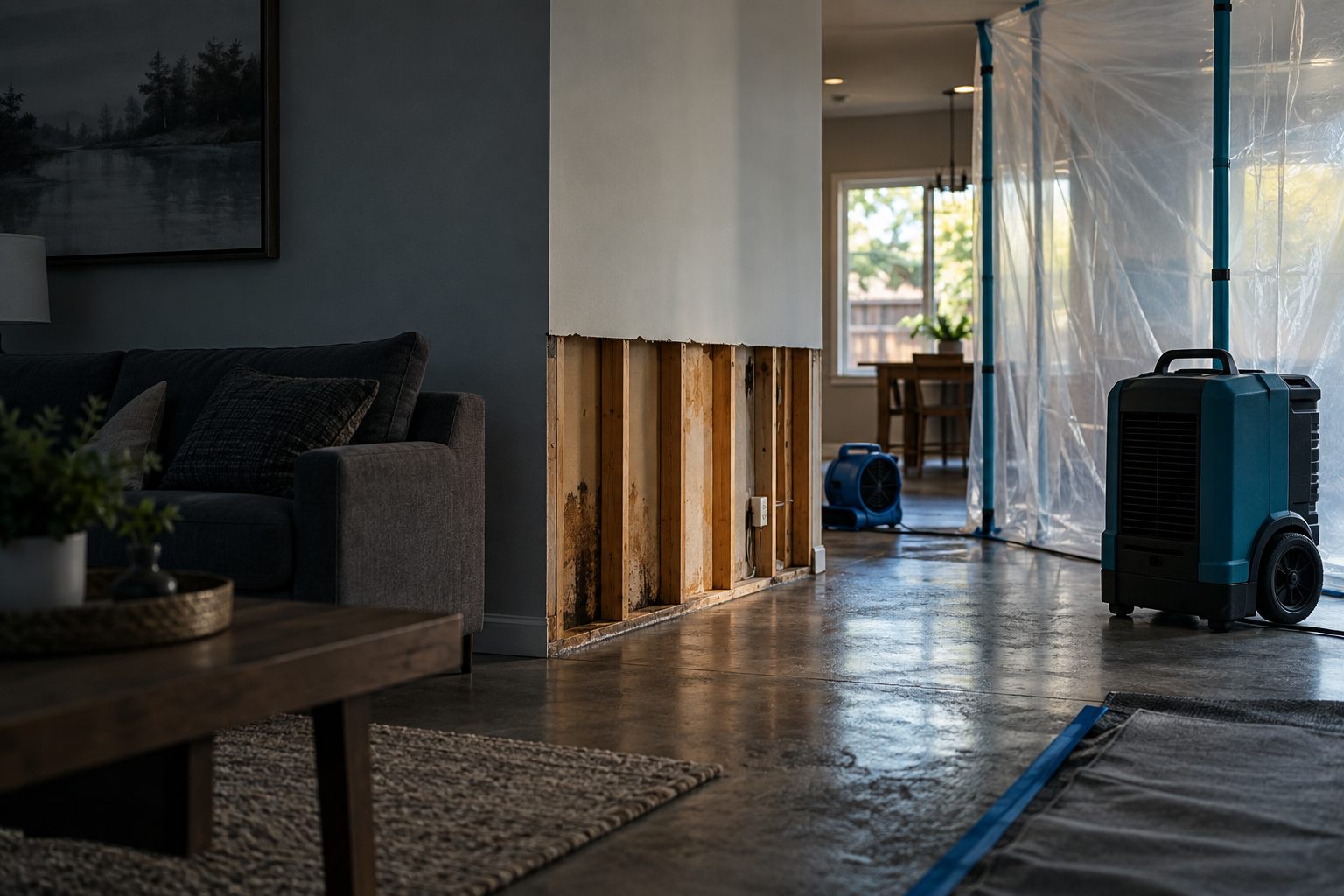
Suspect mold in your home?
Temple, TX mold removal starts here.
Visible growth, a musty smell or damage after a leak? Find the right type of assessment, understand the cleanup process and prepare to discuss your property with a qualified provider.
Suspect mold? Talk through the next step.
Describe what you have noticed and ask about service availability for your Temple address, the assessment process and any visit fees.
A referral website connecting your enquiry with independent providers.
Call +1 (713) 260-9930- Tell the provider what you see or smell
- Give your city and ZIP code
- Ask about the assessment and its cost
- Confirm availability before arranging a visit
Start with the building and its water history.
Know what is included before work starts.
Check provider qualifications through TDLR.
Use the guides to prepare and compare.
What brought you here today?
Active water near electrical equipment, structural damage or contaminated floodwater needs an appropriate emergency response. Do not enter an unsafe area.
A mold problem is also
a moisture question.
For a Temple property, begin with its actual conditions. Cooling equipment, a roof opening and a concealed plumbing leak can lead to similar marks — but need different repairs.
When moisture comes from the equipment
A wet air-handler closet, recurring drain overflow or dampness around a register deserves an HVAC investigation. Record when it happens, then ask how the equipment and adjacent building materials will be assessed.
When water comes through the building
Staining after rain and dampness after using an appliance provide different clues. Keep the timing and repair history together. A fresh finish can hide a stain without establishing whether the source has been corrected.
Ask what caused the material to become wet, how the work boundary was determined, and what will demonstrate completion.
What are you noticing?
A drain pan, line, duct or nearby finish needs investigation.
Connect roof repairs with assessment of the interior.
Log the room, timing and recent building changes.
Review the source repair and earlier scope.
From the first inspection
to the final repair.
Understand where each service fits, what to ask, and what its scope should include.
Mold inspections
A stain is a clue, not a diagnosis. A useful mold inspection connects the condition you can see with the water history of the building.
Read the guide →Mold testing
Testing should answer a defined question. Paying for samples without a reason can leave you with numbers and no practical next step.
Read the guide →Mold remediation services
A sound remediation project addresses damaged material and the reason it became wet. The written plan is the link between those two tasks.
Read the guide →Attic mold removal
Roof sheathing, insulation and ceiling penetrations tell different stories. An attic investigation should explain the pattern of moisture before choosing a treatment.
Read the guide →Black mold removal
Dark growth deserves investigation, but color alone does not identify a species or establish the extent of a problem. Focus on moisture, affected materials and the work area.
Read the guide →Crawl space mold removal
A crawl space project needs an access plan as well as a moisture plan. Joists, insulation, plumbing and the ground below the house should be considered together.
Read the guide →Air duct & HVAC mold cleaning
A mark at a supply register is not enough to diagnose an entire duct system. Assessment should identify the affected component and the source of moisture.
Read the guide →Post-remediation verification
Verification should be planned before cleanup begins. It gives the project a defined endpoint and identifies who can assess whether the agreed conditions were met.
Read the guide →Mold damage repair
Reconstruction restores what cleanup removed. It is a separate phase with its own materials, responsibilities and decisions about when an area is ready to close.
Read the guide →Know the sequence.
Keep the decisions clear.
The details depend on the property. A clear plan connects source correction, cleanup and the handover to reconstruction.
Understand the moisture
Record the water history and investigate the source before choosing a treatment.
Define the work
Agree on the affected area, access, exclusions and a written scope.
Coordinate the repair
Identify who handles plumbing, roofing or mechanical problems that contributed to the condition.
Protect adjacent spaces
Ask how the contractor will manage the work area and affected belongings.
Address affected materials
Make cleaning and removal decisions based on the assessment and material condition.
Document drying and completion
Keep the checks and records required by the project plan.
Verify and restore
Complete the agreed verification before concealing the area with new finishes.
Before you accept a proposal
| Look for | Ask this question |
|---|---|
| Work boundary | Which rooms and materials are included? |
| Source correction | Who fixes the original water problem? |
| Access & protection | How will adjacent rooms be managed? |
| Changes | Who approves additional work and its price? |
| Completion | What records and checks are required? |
| Reconstruction | Who replaces finishes after cleanup? |
Check the TDLR mold program and relevant provider credentials. Do not assume guidance from another state applies to your project.
Visit the official TDLR program →Compare the work.
Then compare the price.
A total means little without knowing what it covers. Assessment, source repairs, cleanup, verification and rebuilding may be separate.
Read the cost planning guide →Keep these three questions together
- What is included in the current scope?
- What could change after access is opened?
- Who approves and documents that change?
Use the same property details when requesting proposals so you can compare them fairly.
Confirm service for your property.
This website focuses on Temple property owners. Availability is specific to the independent provider and the full property address.
Before arranging a visit
- Give the city and ZIP code
- Confirm the provider can attend your address
- Ask what the assessment includes and costs
- Verify applicable qualifications with TDLR
Practical answers.
Better-informed decisions.
Room-specific guides, project checklists and questions worth asking.
AC condensation and mold concerns
Water is a normal byproduct of air conditioning, but it should follow a controlled path out of the equipment. A wet ceiling, sweating duct, or damp closet beside the air handler means that water is reaching somewhere it does not belong. The useful first question is where that path changed, because fixing a drain, repairing insulation, and assessing wet building materials are different jobs.
Read the guide →Mold after a roof leak
Stopping a roof leak does not automatically resolve the wet insulation, framing, or ceiling below it. Water entry and interior recovery are separate parts of the same project, and the handoff between them is where important work can be missed. Start with safe access and source control, then establish which materials became wet and what evidence is needed before repainting.
Read the guide →Mold inspection vs. testing: which should come first?
You notice a stain or a musty smell, search for help and find packages built around a number of samples. But samples may not answer the first question: where is the moisture coming from, and which materials are affected? Start with the decision you need to make about the property, then choose the investigation that can support it.
Read the guide →What Temple homeowners
want to know.
Does every mold concern need testing?
No. An assessment should establish the question first. Visible growth may already justify attention without identifying a species. Ask how a proposed sample would change the next step.
Does Texas regulate mold contractors?
Texas has a TDLR mold assessment and remediation program. Requirements and exemptions depend on the work. Check the official program and verify the relevant provider credentials before hiring.
Can a color identify black mold?
Color alone does not identify a species or determine the work required. Record the location, approximate extent and moisture history, and have the condition assessed.
Why does the same spot keep coming back?
The moisture source may remain unresolved, or a new source may have appeared. Compare the location and timing with earlier records and have the repair and affected materials reviewed.
Can I get an exact price from a photograph?
A photograph can help describe the concern, but it may not show access, concealed damage or the full work boundary. Use a written property-specific scope to compare proposals.
Is this website the contractor?
No. Temple Mold Removal Pro is a referral website. Independent providers carry out assessment and remediation. Confirm their qualifications, availability and written terms directly.
Suspect mold? Talk through the next step.
Describe what you have noticed and ask about service availability for your Temple address, the assessment process and any visit fees.
A referral website connecting your enquiry with independent providers.
Call +1 (713) 260-9930- Tell the provider what you see or smell
- Give your city and ZIP code
- Ask about the assessment and its cost
- Confirm availability before arranging a visit
EPA: Mold, moisture and your home
Texas TDLR: Mold assessors and remediators
General property guidance. An on-site assessment determines the needs of an individual building.