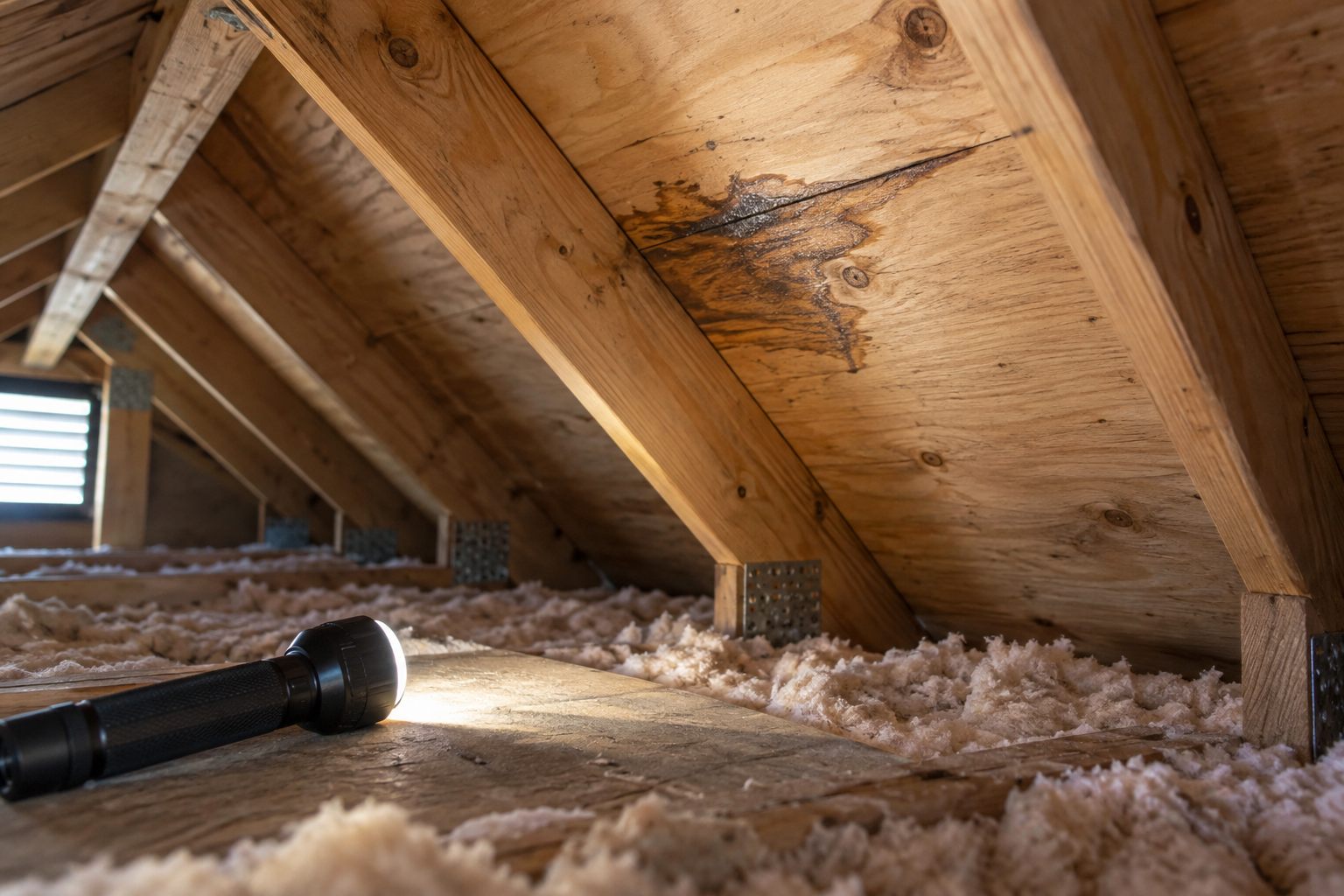
Deal with active entry and unsafe ceilings
Keep people out from beneath a sagging or bulging ceiling. Do not poke it to release water or climb into the attic above it to inspect the damage. Water near light fixtures, wiring, or electrical equipment adds another reason to obtain qualified help before anyone handles the area.
Move unaffected belongings if it is safe to do so, and document the room from a dry stable position. Do not climb onto a wet or storm-damaged roof to place a tarp yourself. Temporary protection should be arranged with someone who can assess the roof and work safely. The urgency to stop water does not make unsafe access acceptable.
If the property has broader storm damage, follow official access and utility guidance. A roof leak in an otherwise intact house and a structure damaged by severe weather present different conditions. CDC's post-disaster return guidance emphasizes safe entry and avoiding wet electrical hazards.
Report the issue promptly to the property manager if you rent. Include where water is entering, whether the ceiling is changing shape, and whether electrical components are nearby. Those are actionable observations. You do not need to determine whether the discoloration is mold before requesting repair of an active leak.
Document when the leak appears
Record the weather associated with the event: rain, wind direction if observed, duration, and whether water continued after the rain stopped. Avoid inventing a rainfall amount or storm classification. A note that water appeared during wind-driven rain is useful even without a weather-station measurement.
Photograph the ceiling and nearby walls with enough context to identify the room. Mark where dripping first appeared and where stains later spread. Keep older photographs if this is a recurrence, because a freshly painted ceiling may no longer show the earlier boundary. The sequence can help the roofer distinguish a repaired source from a newly observed one.
Ask the roofer to document the source identified and the repair performed. A general “roof repaired” invoice does not tell the interior contractor whether a penetration, flashing detail, or another component was implicated. If the source could not be confirmed, that limitation belongs in the record rather than being replaced with a confident assumption.
For Temple properties, use the actual event history instead of importing a coastal hurricane narrative. Central Texas storm conditions can affect roof entry, but the useful local information is what happened at this building and what the relevant repair professional observed. A regional label alone cannot explain the route water took through the assembly.
Follow the likely path through the assembly
The visible ceiling stain may be some distance from the roof entry point. Water can encounter roof sheathing, framing, insulation, ducts, and ceiling materials before it becomes visible indoors. Ask the evaluator to trace the likely route using accessible evidence rather than assume the roof defect is directly above the stain.
An attic inspection should identify access limits. Limited decking, heat, wiring, damaged material, and tight clearances can prevent complete observation. “Accessible area inspected from the hatch” is a meaningful limit; “entire attic clear” is not supported if much of it was never reached. Do not attempt to fill that gap by walking on ceiling material yourself.
The guide to attic ventilation and moisture explains other possible wetting mechanisms. A roof leak and an attic-moisture condition can coexist. Repairing an obvious roof defect should not prevent the investigator from noting a separate duct or exhaust concern if evidence supports it.
Map the affected materials, not only the stain. Ask whether insulation was wet, whether board condition changed, and whether framing requires evaluation. If moisture readings are used, request labeled locations and their interpretation. A photograph of an instrument without a location or material reference is difficult to use when deciding what can be covered later.
Separate roof repair from interior drying
Clarify responsibility before contracts overlap. The roofer may stop water entry without removing insulation. A restoration provider may dry exposed material without repairing the roof. A finish contractor may replace board without performing mold assessment. The owner or property manager needs a sequence in which each trade knows what has been completed and what remains.
Prompt action helps limit damage. EPA's moisture guidance recommends drying wet materials quickly after leaks. Its timing is a practical prevention target, not a guarantee that any material dried by a particular hour is clean or salvageable. A concealed leak of unknown duration needs evaluation based on its actual condition.
Ask what drying is intended to reach. Room air may become drier while a concealed layer remains inaccessible. Equipment should be selected and monitored for the affected assembly, and suspected contamination should not be blown through occupied rooms with a household fan. A defined drying plan states who will assess progress and readiness.
If mold work is part of the project, check the provider's Texas role using TDLR's laws and rules resources and consumer guidance. Licensing and exemptions are distinct from roofing qualifications. Request the assessment, remediation, source repair, and reconstruction scopes separately enough to understand the handoffs.
Evaluate damaged insulation and drywall
Wet insulation and board are not automatically salvageable because the roof has stopped leaking. Material type, condition, access, water history, and established growth affect the decision. EPA's material guidance treats different components differently rather than prescribing one cleanup method for the whole assembly.
The article on mold on drywall explains why a painted face can conceal a damaged reverse side or cavity. A contractor should explain why a material is being retained, cleaned, or removed. “The stain can be covered” is a decorating observation, not an assessment of the board behind it.
When removal is necessary, agree on the boundary and a process for newly exposed findings. Ask how the work route and occupied rooms will be protected. If an opening reveals more damage than the initial estimate anticipated, the change should be documented with photographs and an explanation rather than an unexplained increase in the bill.
Do not assume that sampling must precede every repair. An obvious active leak needs correction regardless of a mold test. If sampling is proposed as part of assessment, ask what decision the result will support. The physical condition of wet board, insulation, and framing still needs attention even when the service includes a laboratory report.
Verify the handover before repainting
Before finishes hide the work, confirm that the source repair is documented, the material scope is complete, and retained components meet the project's readiness criteria. If a formal post-remediation assessment applies, resolve it before reconstruction. The person installing new board or insulation should know who has authorized that next stage.
Keep a short responsibility chain: roof source, interior assessment, material work, drying, completion review, and finish restoration. Beside each item, list the responsible company and the record received. The guide to cleanup records and photos provides a practical way to organize those documents without creating an unmanageable archive.
Insurance is a separate decision from repair readiness. The Texas Department of Insurance explains that water and mold coverage depends on the cause and policy provisions. Notify the insurer promptly, document necessary temporary work, and clarify permanent repair and evidence requirements; a contractor's estimate is not a coverage determination.
Revisit the repaired area after a comparable rain event when it is safe. A dry ceiling during fair weather offers limited evidence about a rain-entry repair. Record any new staining, wetness, or change in the original pattern and share it with the responsible trade. The strongest final result is a dry, documented assembly with an explained source repair, rather than a ceiling whose history disappeared under fresh paint.